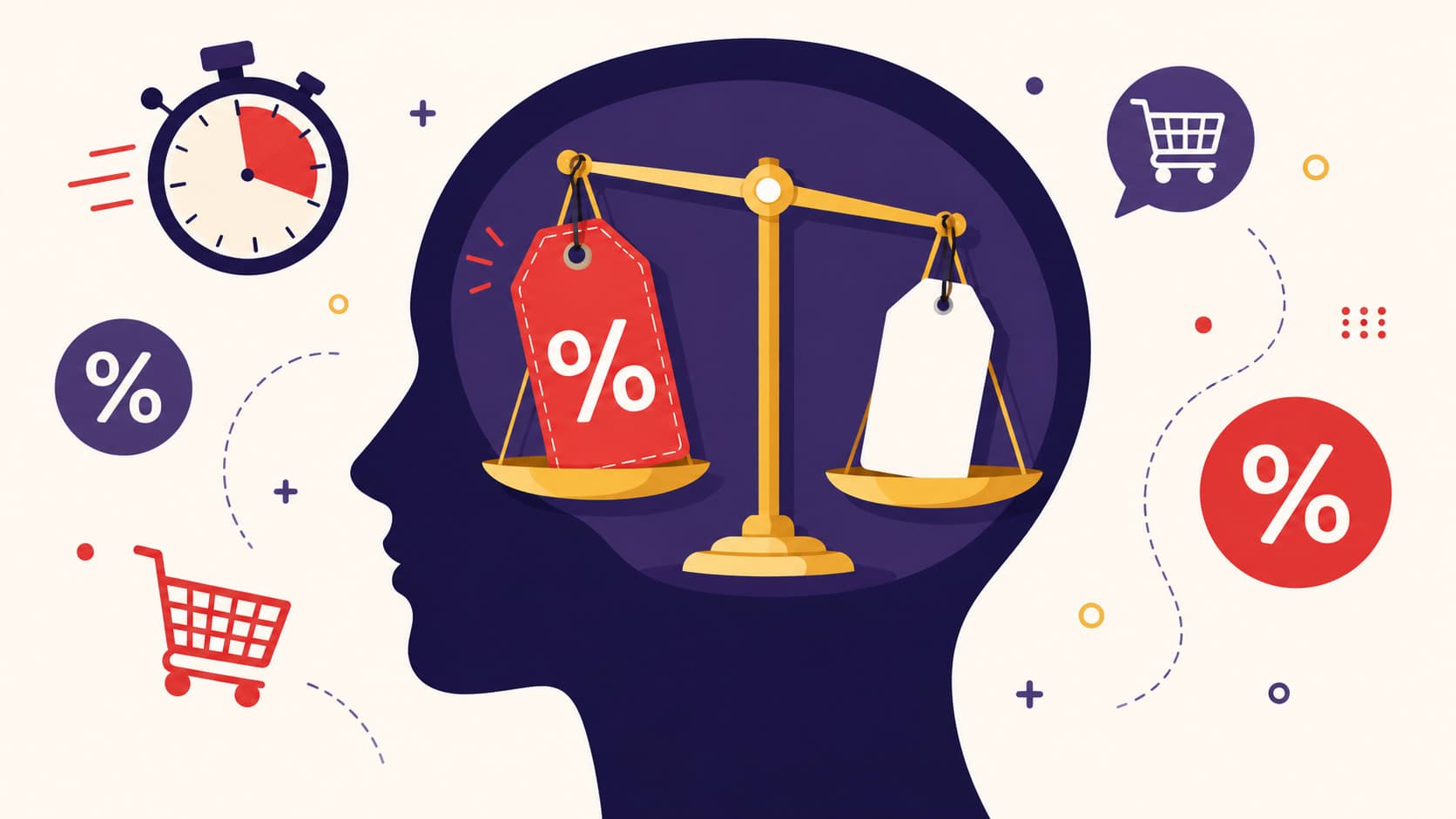
Price Tracking 101: How to Buy Everything at Its Lowest Price
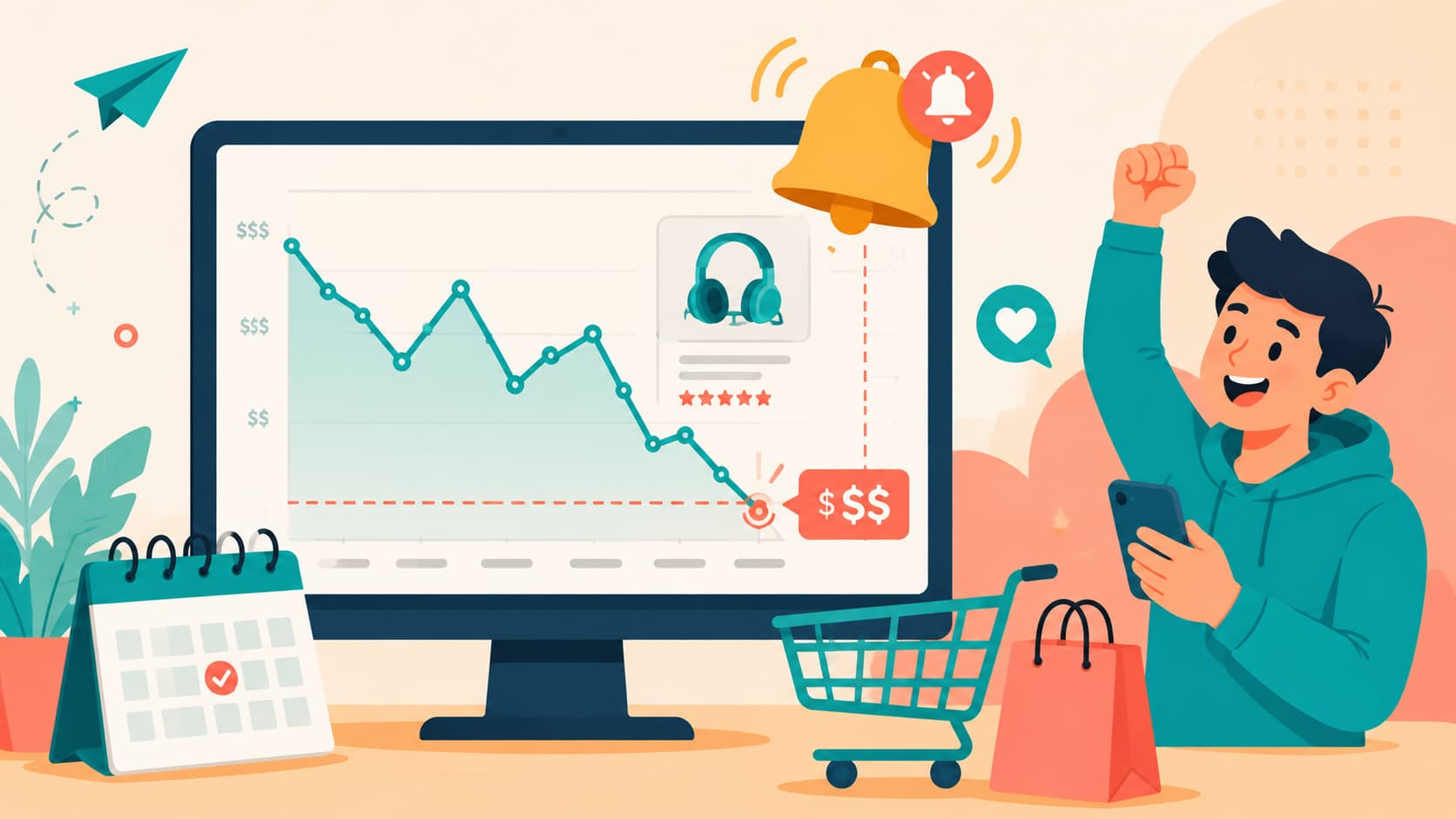
There's a special kind of heartbreak reserved for online shoppers. You finally buy those headphones you've been eyeing for months — $249, felt like a fair deal — and exactly nine days later, you open the same product page and see them sitting there at $209.
Forty dollars. Gone. Not because you did anything wrong, but because you bought on a Tuesday when you should have bought the following Thursday.
Here's the thing nobody tells you when you start shopping online: prices aren't prices anymore. They're moving targets. The same blender, the same sneakers, the same TV can swing 20%, 30%, sometimes 40% within a single month — no coupon required, no sale banner in sight. The store simply changed the number.
Price tracking is the skill of making those swings work for you instead of against you. It costs nothing, it takes minutes to set up, and once it becomes a habit, you'll almost never overpay for anything with a screen, a plug, or a shipping box again. Let's build that habit right now.
Why Prices Move Constantly (and Why That's Great News for You)
Online retailers use something called dynamic pricing — software that adjusts prices automatically based on demand, inventory, competitor prices, the day of the week, and about a dozen other signals. Big marketplaces change millions of prices every single day. That number you see on a product page isn't carved in stone; it's more like a stock ticker with a shopping cart attached.
This sounds sinister, but flip it around: if the price of everything is always in motion, then everything is eventually on sale — often without ever being labeled as a sale. The shopper who buys the moment the urge strikes catches a random point on that price curve. The shopper who tracks the curve buys at the bottom of it.
Same product. Same store. Completely different bill.
A real-world flavor of how much prices swing on a typical $400 item over three months:
Week 1: $399 (launch-ish pricing, everyone's excited)
Week 4: $429 (demand spiked, price quietly followed)
Week 7: $349 (competitor ran a promo, store matched)
Week 11: $319 (inventory clearance before the new model)
Buy at the wrong moment and you pay $110 more than the patient shopper — for the exact same box.
The Core Skill: Reading Price History
Before you buy anything over, say, $50, you want to answer one question: is today's price actually a good price for this item? Not "is it lower than the crossed-out number next to it" — we'll get to why that number lies in a minute — but "is it low compared to what this item has actually sold for over the past few months?"
That's what a price history chart tells you. Free price tracking tools keep a running record of what an item has cost over time, and one glance at that chart tells you more than any sale badge ever will:
The typical price — where the line sits most of the time. This is the item's "real" price, regardless of what the listing claims.
The all-time low — the best price the item has ever hit. Your gold standard.
The rhythm — does it dip every few weeks? Only around holidays? Constantly? The pattern tells you how long you'd wait for a deal.
Once you've seen the chart, today's price stops being a mystery. If the item usually sells for $80, is listed at $79, and once hit $58 — that "SALE" banner is decoration, not a discount. If it's sitting at $61? Now you're talking.
The Three-Zone Rule
Here's a simple way to turn a price chart into a decision:
Green zone — current price is within about 10% of the historical low. Buy it. Waiting for the absolute bottom rarely saves enough to justify the risk of the price climbing back up.
Yellow zone — price is around its typical average. Buy only if you need it now; otherwise set an alert and park it.
Red zone — price is above its usual average. Do not buy. You're paying a premium for impatience, and the chart is telling you so in writing.
Price-Drop Alerts: Let Robots Do the Stalking
Checking a product page every morning like it's a weather report is not a lifestyle. The good news is you don't have to — this is exactly what price-drop alerts are for.
The setup takes about a minute: you tell a tracking tool which product you want and what price you'd happily pay, and it watches the listing around the clock. The moment the price crosses your line, you get an email or notification. You went about your life; the deal came to you.
How to Set an Alert Price That Actually Triggers
Most people set alerts wrong. They pick a fantasy number — "alert me when the $300 monitor hits $150" — and then wonder why their phone never buzzes. Use the price history instead:
Check the historical low first. If the item has never dropped below $219, an alert at $150 is a wish, not a plan.
Set your alert 5–10% above the all-time low. That range triggers regularly and still catches genuinely great prices.
For must-have-soon items, set it at the average price. You'll get pinged on the next routine dip, usually within a couple of weeks.
Wishlist Parking: The Laziest Money Move That Actually Works
Now for the strategy that requires almost no effort and pays out constantly: wishlist parking.
The idea is simple. When you want something that isn't urgent — and be honest, most purchases aren't — you don't buy it. You park it. Add it to a wishlist or a tracked list, set your alert, and walk away. You've converted an impulse into a pending order that only executes at a price you chose.
Parking does two beautiful things at once:
It captures the price drop. Most non-grocery items dip meaningfully within 30–60 days of any given moment. Parking means you're always buying in the dip instead of at a random point on the curve.
It filters out impulse buys. A surprising number of parked items lose their appeal within a week. Congratulations — you just saved 100% on something you never actually wanted. That's a discount no promo code can match.
Say you park five non-urgent purchases instead of buying them on the spot:
Robot vacuum: $349 → alert fires at $289 (saved $60)
Running shoes: $140 → alert fires at $104 (saved $36)
Stand mixer: $299 → alert fires at $249 (saved $50)
Desk chair: $220 → you realize two weeks later you don't need it (saved $220)
Bluetooth speaker: $89 → alert fires at $64 (saved $25)
Total kept in your pocket: $391 — for adding five items to a list and doing absolutely nothing else.
Know the Calendar: Seasonal Price Cycles by Category
Prices don't just wander randomly — a lot of the movement follows the retail calendar, and it repeats every year like clockwork. Learn the rhythm for the things you buy and you can predict discounts months in advance:
TVs and home theater — cheapest around Black Friday (late November) and again right before the Super Bowl in late January/early February.
Laptops and tablets — back-to-school season (late July through August) and November sales events.
Winter clothing and coats — bottom out in January and February, when stores are desperate to clear racks for spring.
Grills, patio furniture, and summer gear — cheapest in September and October, after the season ends. Buy your grill when everyone else is buying Halloween candy.
Fitness equipment — ironically priciest in January (resolution season) and cheapest in late spring and summer.
Mattresses and large appliances — reliably discounted on holiday weekends: Presidents' Day, Memorial Day, July 4th, Labor Day.
Last year's tech models — plunge the moment the new version is announced. If you don't need the newest one, announcement day is your payday.
The pattern behind the pattern: buy at the end of an item's season, not the beginning. Demand sets the price, and demand is lowest exactly when everyone else has stopped looking.
The "Was $199" Lie: Spotting Fake Original Prices
Time to ruin a very popular illusion. That crossed-out "was" price sitting next to the sale price? It's frequently fiction — or at least creative storytelling.
The trick is called price anchoring. A retailer lists an inflated "original" price that the item rarely (or never) actually sold at, then shows a "sale" price that's really just... the normal price. Your brain sees "was $199, now $129" and registers a $70 win. The price history chart sees an item that has sold for $129 almost every day of its life.
Some listings take it further: the "was" price quietly gets raised a few weeks before a big sales event so the "discount" looks deeper when the event arrives. The sale price in November can even be higher than the everyday price in October. It's the retail equivalent of a magician's misdirection — and price history is you watching the trick from backstage.
Your defense is one habit: never trust the crossed-out number; trust the chart. A discount is only real if it's measured against what the item actually sells for. Everything else is theater.
The Finishing Move: Tracked Low Price + Promo Code
Here's where price tracking stops being a nice trick and becomes a system. A tracked historical low is a great price. A promo code is a great discount. Apply the code to the low, and you get pricing that walk-in shoppers simply never see.
The sequence looks like this:
Step 1: Park the item and set your alert near the historical low.
Step 2: When the alert fires, don't check out yet — the price is the floor, not the finish line.
Step 3: Grab a code. Pull up the store's page on Lyfestic's store directory and check for a working promo or free-shipping code before you pay.
Step 4: Stack anything else that fits — cash back offers, loyalty points, a free shipping threshold.
The full combo on a $329 espresso machine:
Alert fires at the historical low → $259
10% promo code at checkout → $233.10
Free shipping code kills the $12.99 delivery fee → still $233.10, nothing added
That's $108.89 below list price — about 33% off — on an item that never once appeared in a "sale" banner.
One timing note: deep price drops and promo codes sometimes exclude each other (stores aren't completely asleep). When that happens, just compare the two totals and take the better one. Either way, you're choosing between two good outcomes instead of hoping for one.
Price Tracking Mistakes That Cost You Money
Tracking is simple, but there are a few potholes worth steering around:
Waiting forever for the absolute bottom. If the price is within 10% of the all-time low, buy. Holding out for a record that may never repeat is how people watch a $249 deal climb back to $329.
Trusting the "was" price instead of the history. One is marketing copy; the other is data. Bet on the data every time.
Ignoring the seller behind the price. On marketplaces, a "record low" from an unknown third-party seller with rough reviews isn't a deal — it's a gamble with a discount sticker on it.
Tracking the wrong variant. Prices differ by color, size, and configuration. Your alert on the black version won't tell you the identical silver one just dropped $45.
Forgetting shipping and taxes. A $199 listing with $24 shipping loses to a $212 listing with free delivery. Compare totals, not stickers.
Buying parked items out of boredom. The whole point of parking is patience. If you're checking your wishlist at midnight "just to see," set alerts and close the tab — that's what the robots are for.
Frequently Asked Questions
Are price tracking tools really free?
The popular ones, yes. Most make money through affiliate commissions paid by stores when trackers eventually buy — the same store-funded model legitimate coupon sites use. You should never pay a fee, and you should never hand over payment details just to watch a price.
How long should I wait for a price to drop?
It depends on the category, but most everyday items dip meaningfully within 30–60 days. Check the price history first: if the chart shows a dip every few weeks, a short wait is nearly guaranteed to pay off. If the item only drops around November, decide whether the wait is worth it or buy in the green zone now.
What if the price drops right after I buy?
Check the store's price adjustment policy — many major retailers will refund the difference if the price drops within 7–14 days of your purchase. A quick, polite message to customer service with your order number is often all it takes. Worst case, they say no and you've lost two minutes.
Do prices really change based on my browsing?
Retailers adjust prices mostly by demand, inventory, and competition rather than by individual shopper — but demand-based swings can feel personal when a price jumps right after you viewed something. Tracking defeats it either way: your alert is tied to the number, not your browsing session.
Can I combine a price drop with a coupon code?
Very often, yes — and it's the single best move in this whole guide. Wait for your alert, then check for a promo code before checkout. Some deep discounts exclude codes, so if the code won't apply, compare totals and take the lower one. You win either way.
The Bottom Line: Stop Buying Prices, Start Buying Patterns
Everything above boils down to a short list of habits:
Check the price history before any purchase over $50 — the chart never lies, the sale badge often does
Park non-urgent purchases and let alerts do the watching
Buy in the green zone — within 10% of the historical low is a win, not a compromise
Learn your categories' seasons and shop against the crowd
Finish every tracked deal with a promo code — the floor price plus a code is the best price most shoppers will never see
None of this requires spreadsheets, willpower, or luck. It requires setting up a few alerts once and letting patience collect the difference. The impulsive version of you pays whatever the algorithm feels like charging today. The tracking version of you names a price and waits for the store to agree. Be the second one.
Found your target price? Don't check out without a code.
Browse verified coupon codes by store and stack today's latest promotions on top of your tracked low — that's how a good price becomes a great one.
Happy tracking! 📉
Related Articles
Explore more articles you might like