How to Save Money with Coupon Codes: The Complete Guide to Never Paying Full Price
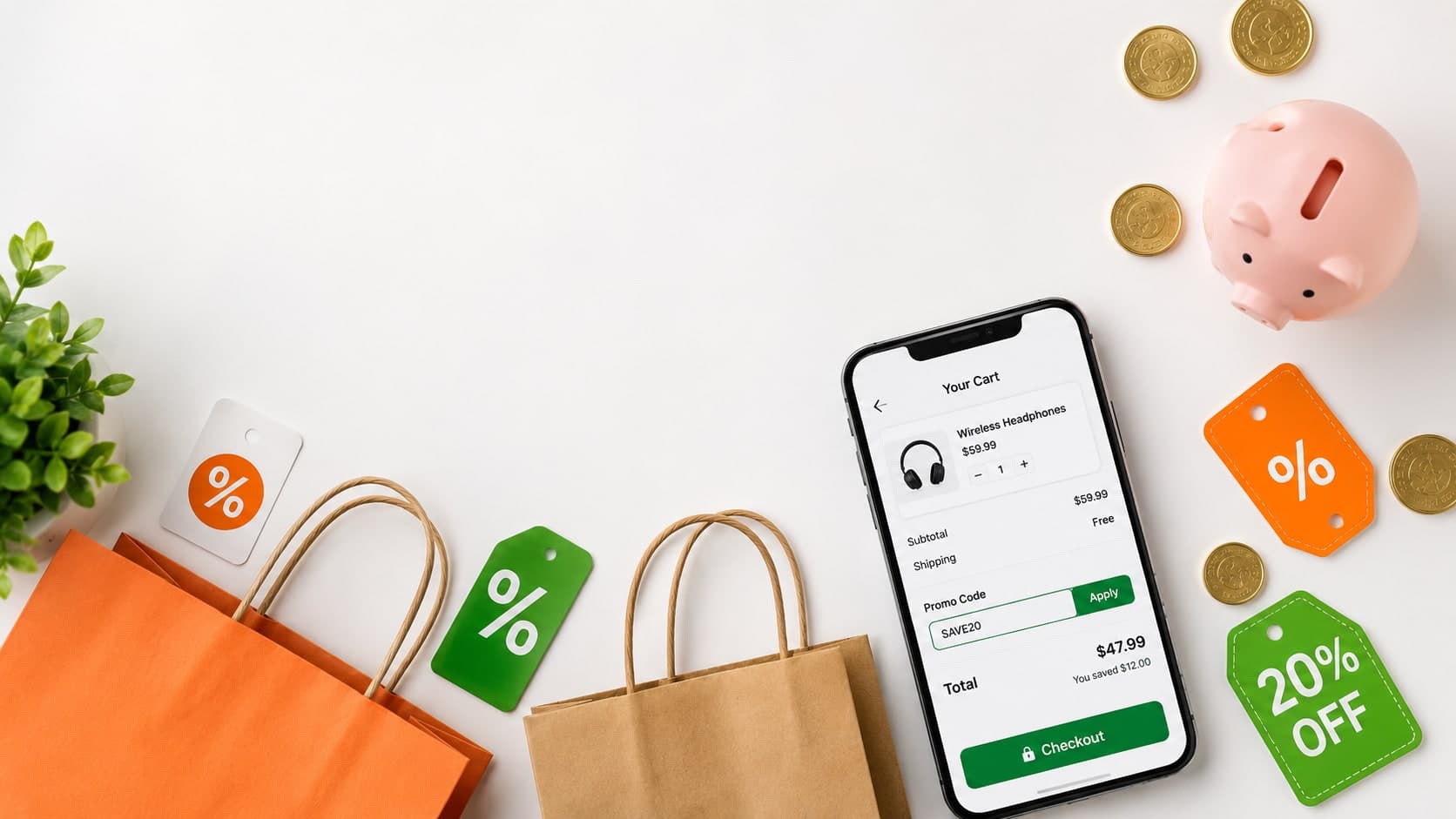
Let me guess. You've just filled your cart, you're one click away from checking out, and there it is — that little box quietly asking, "Have a promo code?"
And you don't.
So you do what most people do: you sigh, pay full price, and move on with your life. Meanwhile, somewhere out there, another shopper just bought the exact same items for 25% less — simply because they knew where to look and spent ninety extra seconds doing it.
Here's the part that stings: studies on consumer spending consistently show that shoppers leave billions of dollars in unclaimed discounts on the table every single year. Not because the deals don't exist — but because most people either can't find them, don't trust them, or give up after the first expired code.
This guide is going to fix that for you, permanently. By the end of it, you'll know exactly how coupon codes work, where the good ones hide, how to stack them for maximum savings, and the mistakes that quietly cost you money. Grab a coffee — your wallet is about to thank you.
First Things First: How Do Coupon Codes Actually Work?
A coupon code (also called a promo code or discount code) is a string of letters and numbers — something like SAVE20 or FREESHIP — that you enter at checkout to unlock a discount. Behind the scenes, brands use them for very deliberate reasons:
- To win new customers — a first-order discount costs the brand less than an ad campaign
- To bring back old ones — "we miss you" codes are a retention classic
- To clear inventory — end-of-season codes move stock fast
- To track marketing — that influencer's special code tells the brand exactly where you came from
Why does this matter to you? Because once you understand that brands want you to use these codes, couponing stops feeling like a trick and starts feeling like what it really is: a discount the store already budgeted for. You're not gaming the system — you're just not overpaying.
Coupon codes generally come in a few flavors:
- Percentage off — 10%, 20%, sometimes 50% off your order
- Fixed amount off — $10 off, $25 off a minimum spend
- Free shipping — often the most underrated code of all (more on that later)
- Free gift or bonus item — spend $50, get a freebie
- BOGO deals — buy one, get one free or half price
The 10 Strategies That Separate Casual Shoppers from Smart Savers
1. Never, Ever Check Out Without Searching for a Code First
If you take just one habit from this entire article, make it this one: the checkout page is a stop sign, not a finish line.
Before you hit "Place Order," open a new tab and look up the store's current codes. That thirty-second pause is, dollar for dollar, the easiest money-saving habit you will ever build. Think about it this way — if a quick search saves you $12 on a $60 order, you just "earned" $12 for half a minute of effort. That's a better hourly rate than most jobs.
To make it even faster, use a site that organizes codes by store — on Lyfestic's store directory, you can jump straight to the brand you're buying from instead of scrolling through pages of random search results.
2. Use Verified Codes, Not Random Internet Lists
We've all been there. You find a list promising "50 working codes!" — and then you paste them in, one by one, watching each one fail like a tiny heartbreak. Code expired. Code invalid. Code not applicable.
Here's the truth: the internet is full of coupon graveyards — pages stuffed with dead codes that exist only to rank on Google. The fix is simple: stick to platforms that actually test and refresh their codes on a regular schedule. A short list of working codes beats a massive list of dead ones every single time.
Quick sanity checks before you trust a code:
- Does the site show when the code was last verified?
- Is there an expiration date listed?
- Are the terms (minimum spend, exclusions) spelled out clearly?
If the answer to all three is yes, you're in good hands.
3. Stack Your Discounts Like a Pro
This is where casual couponers and serious savers part ways.
Most stores accept only one promo code per order — true. But a promo code is rarely the only discount in play. The real magic happens when you layer different types of savings on top of each other:
- Sale price + promo code — apply a 10% code to an item that's already 30% off
- Promo code + cash back — earn a percentage back on the discounted total
- Promo code + free shipping threshold — time your cart to qualify for both
- All of the above + a discounted gift card — the advanced move
Let's make it concrete. Say you're buying a $100 jacket:
- It's on sale for 30% off → $70
- You apply a 10% promo code → $63
- You go through a 2% cash back offer → effectively $61.74
That's nearly 40% off — and not one of those steps required luck. Just order of operations. Check our current promotions page to see which cash back and bonus offers are live right now.
4. Time Your Purchases Around the Retail Calendar
Retail runs on a rhythm, and once you learn it, you'll never shop blind again. Brands save their deepest codes for predictable moments:
- Black Friday & Cyber Monday (late November) — the deepest discounts of the year, period
- End-of-season clearances (January and July) — fashion and home goods at their cheapest
- Back-to-school season (August) — tech, supplies, and clothing deals
- Amazon Prime Day and competitor "anti-Prime" sales (July) — electronics across the board
- Holiday weekends — long weekends almost always bring sitewide codes
The strategy is simple: if a purchase isn't urgent, park it. Add it to your cart or wishlist and wait for the next event. Combining event pricing with a promo code routinely doubles your discount — and the wait is rarely more than a few weeks.
5. Abandon Your Cart (On Purpose)
Here's a trick that feels almost too cheeky to work — and yet it works beautifully.
Add your items to the cart. Start the checkout process. Enter your email. Then… walk away.
Online stores hate abandoned carts the way restaurants hate empty tables. Many of them will email you within 24–72 hours with a gentle nudge — and very often, that nudge includes a 10–15% discount code to sweeten the deal. It doesn't work on every store, but when it does, you've unlocked a code that exists nowhere else on the internet.
Two tips to do it right: make sure you're logged in or have entered your email before leaving (otherwise the store can't contact you), and give it a couple of days before buying — patience is literally money here.
6. Build a "Deals-Only" Email Address
Almost every brand offers a welcome discount — usually 10–20% off your first order — in exchange for your email address. Multiply that across every store you shop at, and newsletter signups quietly become one of the biggest discount sources available.
The problem? Your inbox turns into a promotional war zone.
The solution is elegant: create a separate email address used only for shopping signups. Here's what that gets you:
- Your personal inbox stays clean and quiet
- Every welcome code, birthday offer, and subscriber-only sale lands in one searchable place
- When you need a code for a specific store, you just search that inbox — it becomes your personal coupon archive
Bonus: brands often send their best codes to subscribers first, sometimes days before the public sale begins.
7. Read the Fine Print — It's Where Codes Live or Die
Here's a secret from the other side of the checkout box: most "broken" coupon codes aren't broken at all. They're working exactly as designed — you've just bumped into a condition you didn't know about.
Before declaring a code dead, run through this checklist:
- Minimum order value — many codes only activate on carts above $50 or $75. Sometimes adding a small item unlocks a much bigger discount.
- Product exclusions — sale items, gift cards, and certain premium brands are frequently excluded.
- Expiration date — flash codes can die within 48 hours of launching.
- Customer restrictions — "new customers only" codes won't work on your account if you've ordered before (though a household member's account might qualify).
- One per order — if you're trying to enter a second code, most systems will reject or replace the first.
Learning to skim terms takes ten seconds and saves you the frustration of blaming a perfectly good code — or worse, giving up on couponing altogether.
8. Respect the Humble Free Shipping Code
Let's be honest: "FREE SHIPPING" doesn't spark the same joy as "25% OFF." It feels… small. Unglamorous.
It's also frequently the most valuable code available — especially on smaller orders. Do the math:
- Order total: $30. A 10% code saves you $3.
- Shipping cost: $7.99. A free shipping code saves you $7.99.
The free shipping code is worth more than double the percentage code — yet most shoppers would instinctively grab the 10%. Always compare both before choosing, and remember that on low-cost orders, killing the shipping fee is usually the bigger win.
9. Bookmark the Coupon Pages of Stores You Actually Use
Generic couponing is fine. Targeted couponing is better.
Think about the five stores you order from most — the ones you'll definitely buy from again this year. For those stores, don't wait until checkout to hunt for codes. Bookmark their coupon pages and glance at them before every order.
Why this works: new codes drop constantly, and the best ones — the deep discounts, the flash offers, the limited-quantity deals — expire fastest. Regulars who check the page catch them. Everyone else reads about them after they're gone.
This takes five seconds per order, and over a year of repeat purchases, it compounds into serious money.
10. Track Your Savings — and Don't Let Discounts Trick You into Spending More
Time for the tough-love section, because honest blogging demands it.
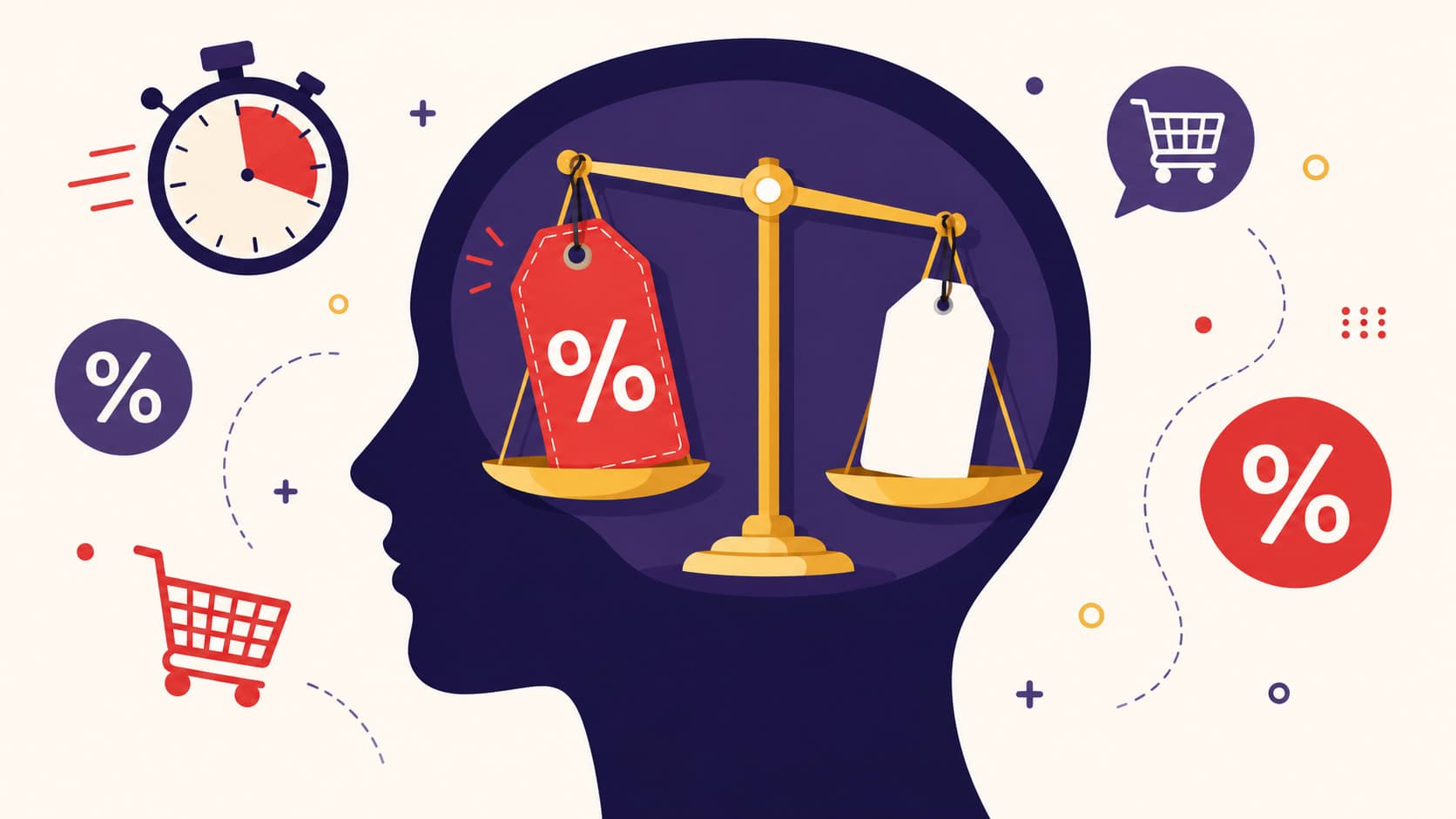
Discounts have a dark side: they're designed to make you spend. "20% off" triggers something in the brain that whispers, "You're losing money by NOT buying this." That's how people end up with a closet full of things they never wear — all purchased "on sale."
Two rules keep you on the right side of the math:
- A discount only counts if you were going to buy the item anyway. Saving 30% on something you didn't need isn't saving — it's spending 70%.
- Measure your savings. Keep a simple note on your phone: item, price, amount saved. Watching the total grow keeps the habit rewarding — and it instantly exposes the months when "savings" quietly became "shopping."
Smart couponing is a budgeting tool, not a shopping license. Treat it that way, and the numbers stay firmly in your favor.
5 Coupon Mistakes That Quietly Cost You Money
Even experienced deal hunters slip up. Watch out for these:
- Grabbing the first code you see. Stores often run several codes at once — a 10% code and a $15-off code may both be live. On a $60 order, they are not equal. Compare before applying.
- Ignoring cash back entirely. It feels like pennies, but 1–2% on every purchase, stacked on top of codes, adds up to real money over a year.
- Letting urgency win. "Only 2 hours left!" is a sales tactic older than the internet. Genuine deals come around constantly — a missed code is never a tragedy.
- Buying to hit a minimum you'll regret. Adding $20 of stuff you don't want to unlock $10 off is a net loss dressed up as a win. Only pad your cart with things you'd buy eventually anyway.
- Forgetting to confirm the discount applied. Always check the order total before the final click. Codes occasionally un-apply when you change shipping options or edit the cart.
Frequently Asked Questions
Are coupon codes really free to use?
Completely. Legitimate coupon platforms earn a small commission from the store when you make a purchase — the store pays it, not you. You never pay extra for using a code; you only pay less.
Why do some codes work for other people but not for me?
Usually it's a targeting issue: the code was for new customers only, tied to a specific email list, or limited to certain regions. It's not personal — just find an alternative code without those restrictions.
Can I use coupon codes on my phone?
Yes, and sometimes you should only shop on your phone — some brands run app-exclusive codes and mobile-only offers to encourage app downloads. If a store has an app, it's worth checking both.
How many codes can I use on one order?
Most stores allow one promo code per order. However, you can almost always combine that single code with sale prices, cash back, loyalty points, and free shipping thresholds — which is exactly what the stacking strategy above is about.
Is it safe to use coupon sites?
Reputable ones, yes. Stick to sites that verify their codes, list clear terms, and don't ask for anything beyond a click. Be cautious of any "coupon" site that requests payment details or personal information just to reveal a code — that's a red flag, not a discount.
The Bottom Line: Savings Are a Habit, Not a Hack
Here's the honest summary of everything above:
- Search before every checkout — thirty seconds, every time, no exceptions
- Trust verified codes and skip the coupon graveyards
- Stack sales, codes, cash back, and free shipping whenever they overlap
- Let the retail calendar work for you — patience routinely doubles discounts
- Track what you save — and never let a discount talk you into a purchase you didn't plan
None of these steps is difficult. None of them takes real time. But strung together into a routine, they change the math on everything you buy — week after week, order after order. That's the difference between occasionally catching a deal and simply never paying full price again.
Your next order is the perfect place to start.
Browse our verified coupon codes by store, check the latest promotions, and put strategy #1 to work today. And if you want more money-saving guides like this one delivered straight to your inbox, our newsletter is waiting at the bottom of the page.
Happy saving! 🛍️
Related Articles
Explore more articles you might like